Canwell Glacier Aurora Expedition


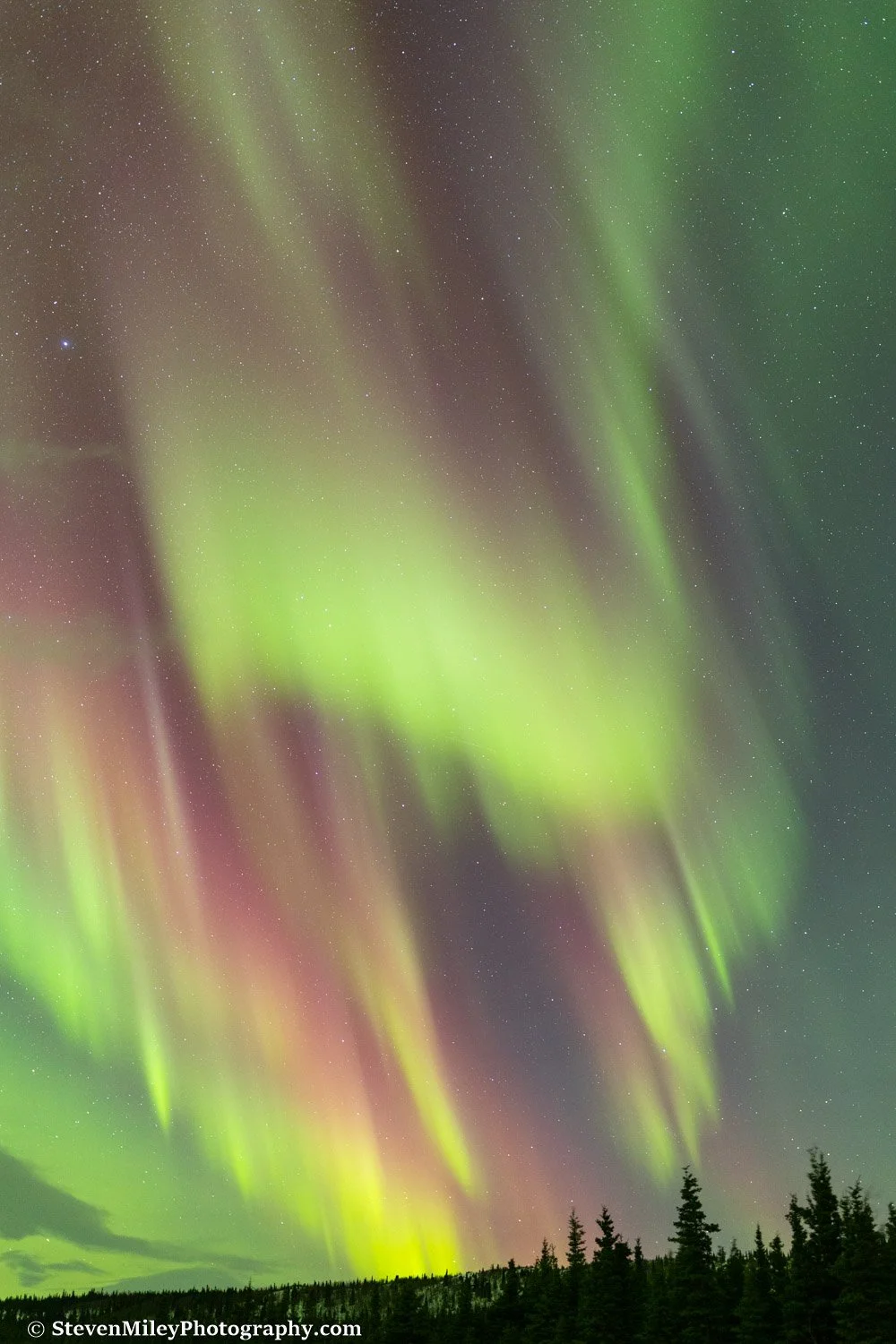
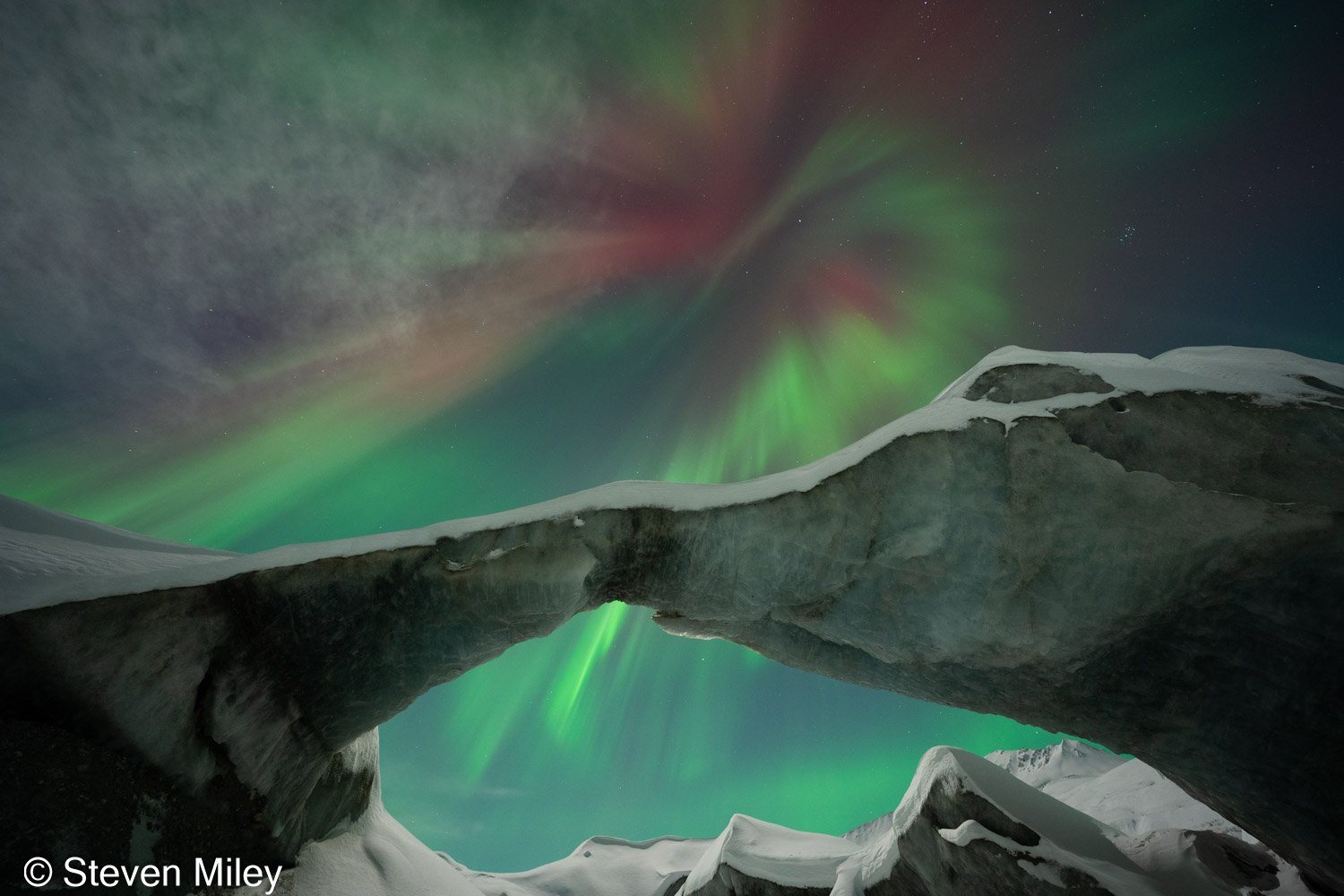
Colorful aurora over an ice arch on Canwell Glacier.

On the night of November 30 - December 1, 2023, a rare combination of clear skies, strong aurora sparked by the direct hit of a coronal mass ejection (CME), a waxing gibbous moon, and a gap in my busy winter guiding schedule prompted me to plan my first backcountry aurora photo expedition in a couple years.

Early in the evening before the arrival of the CME, I started snowshoeing up Miller Creek toward Canwell Glacier utilizing a trail I had packed in the previous day. Models of the CME all agreed it would impact Earth around midnight Alaska time or shortly after, so I was mentally prepared to wait until 4am or later for the accompanying fireworks and planned to camp overnight at the glacier. With modest green aurora dancing through a gap in the clouds over the northern horizon, I cruised along the trail in the dark using a headlamp, flashing my light ahead periodically to check for moose. Luckily, I didn’t encounter any moose, but I did cross a set of fresh wolf tracks in the snow. The gentle hiss of water flowing in MIller Creek was the only sound.

While planning this expedition, one of my adventure buddies put me in contact with Shane, a friend of his from Fairbanks who also wanted to photograph the aurora in the mountains that night. I didn’t have a chance to meet Shane before I set out that night since he had a much longer drive, so he planned to catch up to me later following my trail. I estimated he would travel on skis about twice as fast as I would on snowshoes, so as I neared the glacier I started glancing behind me for a headlamp. I didn’t see him before I disappeared into the hilly terrain of the lower glacier, so I decided to leave him some notes in the snow indicating the time I passed by each spot.

I continued over a few steep hills to an area where I had found stunning ice caves in previous winters, breaking trail through pristine snow with the bright moon providing all the light I needed. As I topped one of the hills, I was surprised to see another track crossing the glacier in front of me, almost certainly left by a group of Dall sheep. After topping the last hill, I spotted a tall, thin arch of ice that would make the perfect foreground for my aurora photos.

Shortly after I began fishing my camera equipment out of my pack, I heard the sound of clacking skis echoing around the surrounding hills. Shane popped over the final hill a couple minutes later and sidestepped down to meet me just before midnight. We barely had time for an introduction before the aurora began to dance vibrantly across the sky and we both went to work photographing. I had no cell service to check the solar wind data, but the CME clearly hit right on schedule. Strong, naked-eye red auroras appeared in several patches of sky over the next few hours accompanied by swirling green. After the aurora finally subsided around 4am, I crawled into a nook under some overhanging ice nearby and nestled into my sleeping bag. The ambient temperature had dropped sharply, but the small space was insulated by the surrounding snow and ice of the glacier, which helped to keep me modestly warm.

Shane returned to the highway that night after dozing for only a short time. I woke up close to sunrise, tossed off my frosty sleeping bag and slipped on my boots and snowshoes, then wandered up the glacier to help my body warm up while looking for more ice caves. I found plenty of awesome sights, but didn’t bother to bring my camera. I returned to my campsite, packed up, and strolled back to the highway, marveling at the new frost on the landscape glinting in the morning sun.

My favorite shot from that night (located at the top of this post) became the December photo for the Greatland Graphics 2026 Aurora Calendar. I included some of my other best shots from that night below.
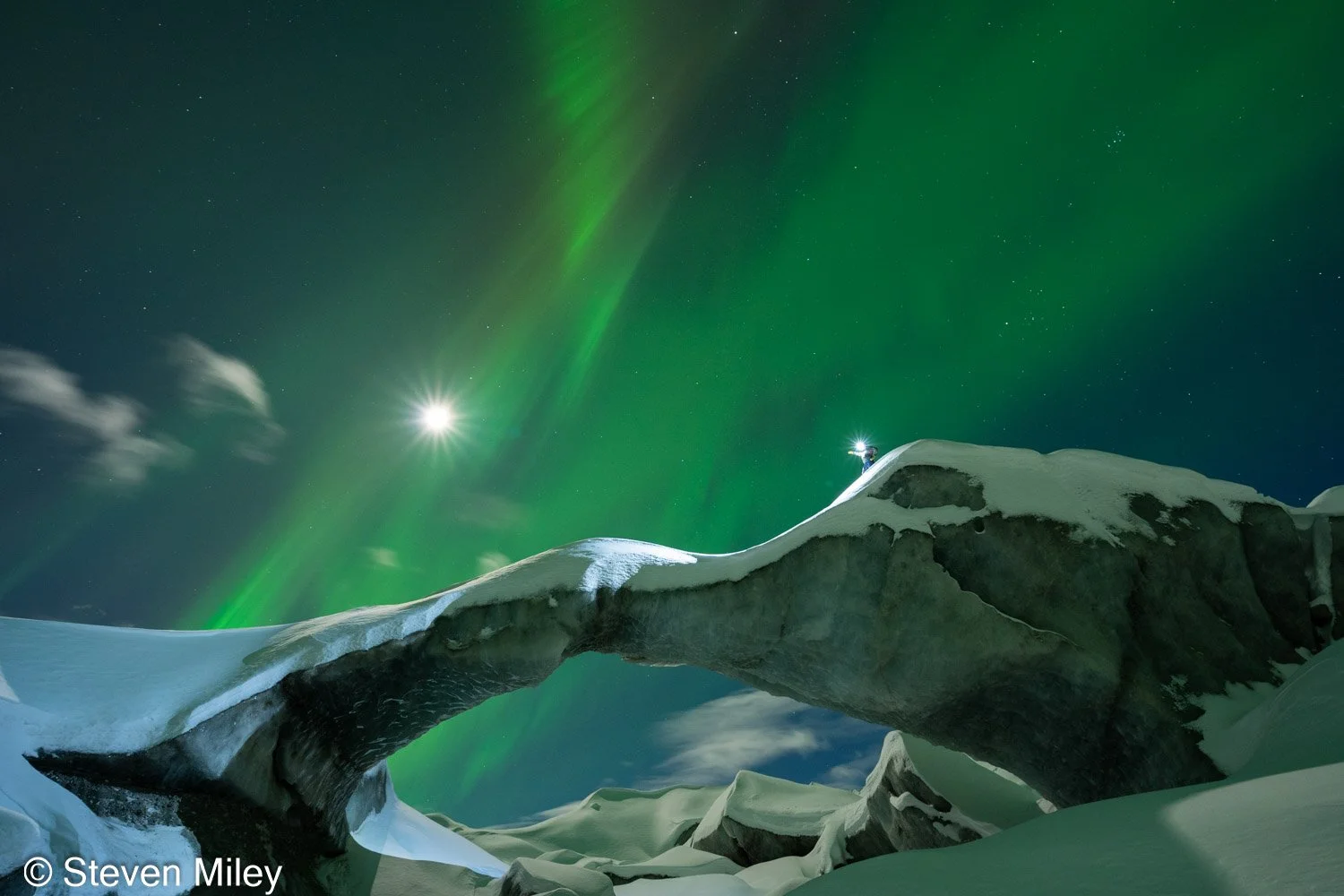
Shane poses with his headlamp on top of the ice arch opposite the bright moon.
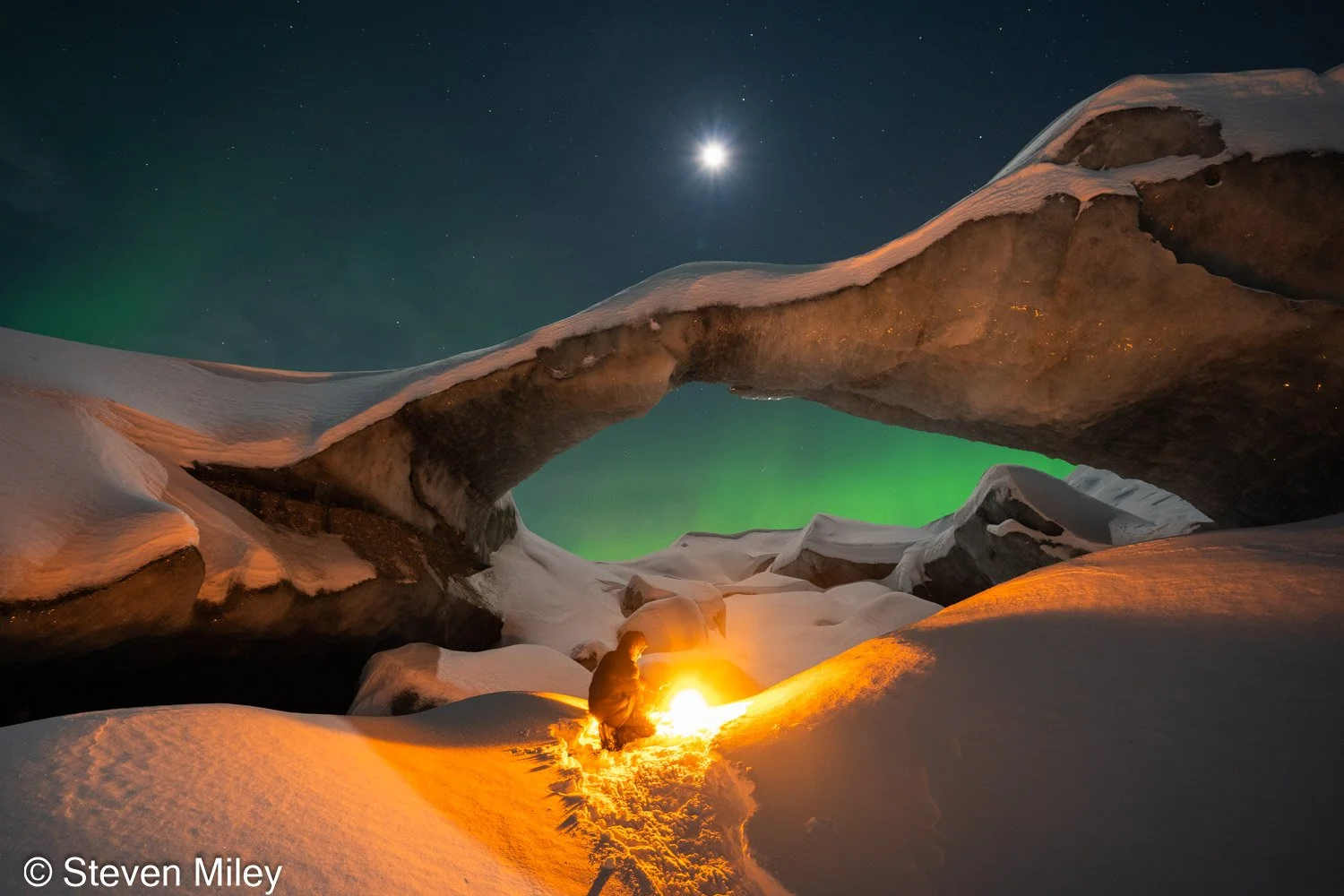
I brought some firewood to use for photos (and to warm my hands while photographing) but the aurora went into a lull after I finally succeeded in lighting a fire.
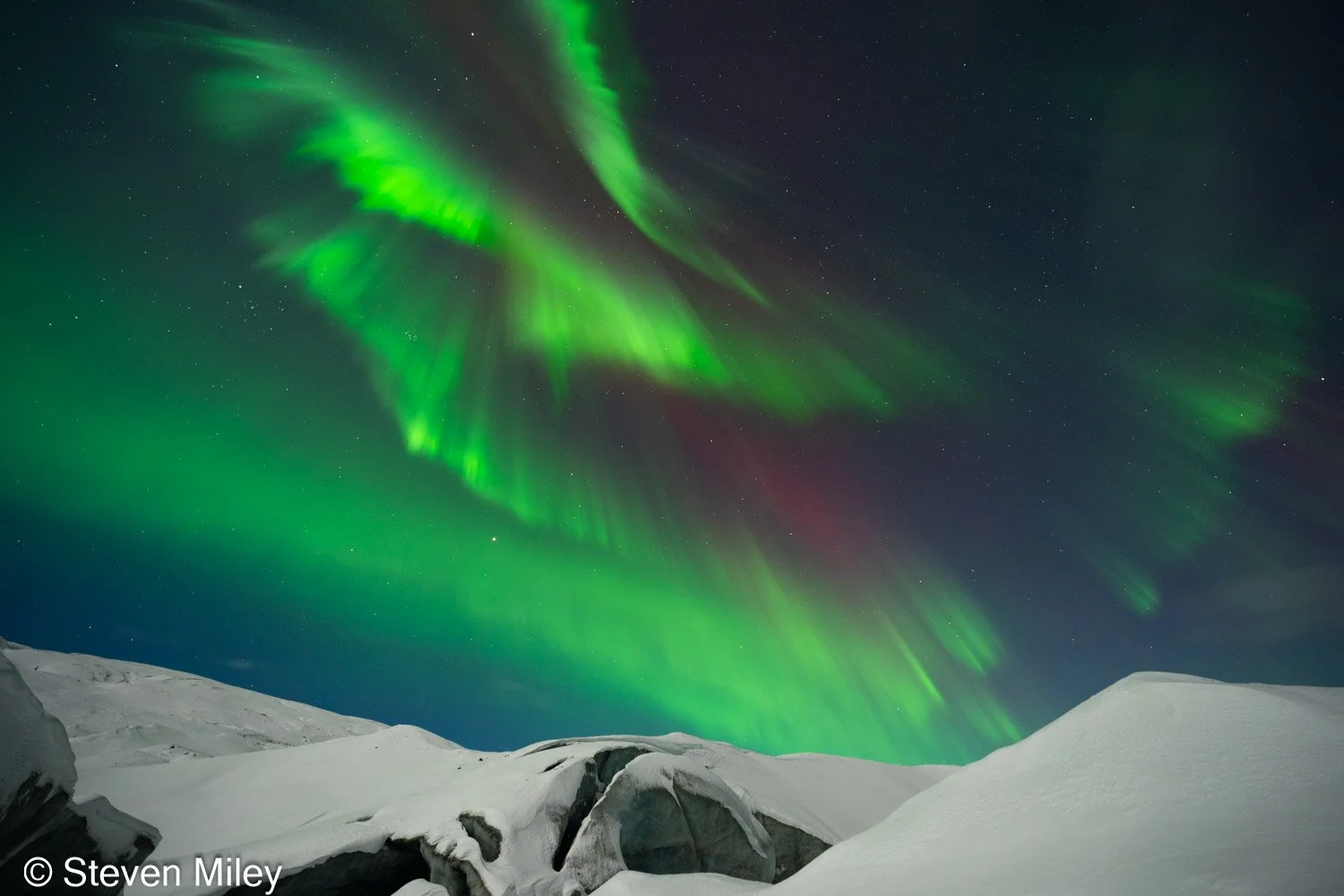
Bright aurora dancing over the snowy hills on the glacier.
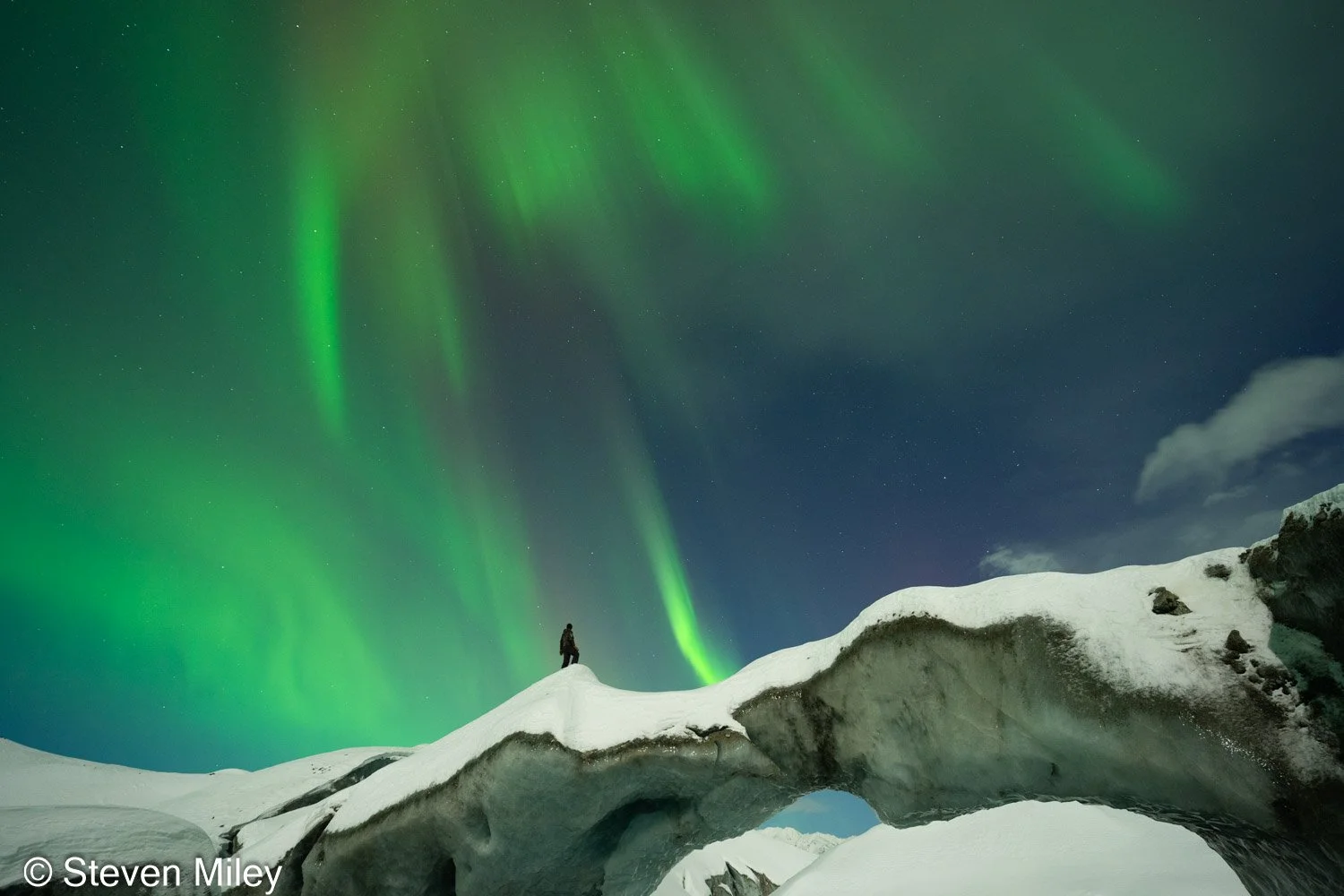
Shane silhouetted on top of the ice arch.
 

My 10 Favorite Shots of 2021


During 2021, I retired my Canon 5D Mark IV and upgraded to mirrorless, investing in several new camera bodies and lenses from both Sony and Canon. The aurora came out of its 11-year solar cycle slump and danced frequently throughout the year. I took what may be the first ever shot of a packrafter in front of Denali on the McKinley River. I also finally returned to Trident Glacier to to take all the photos of that area I wish I could have during my 2018 traverse from Black Rapids to Healy. And my guiding business kept me quite busy through much of the winter and fall seasons. Here are my favorite shots from the year, in no particular order.

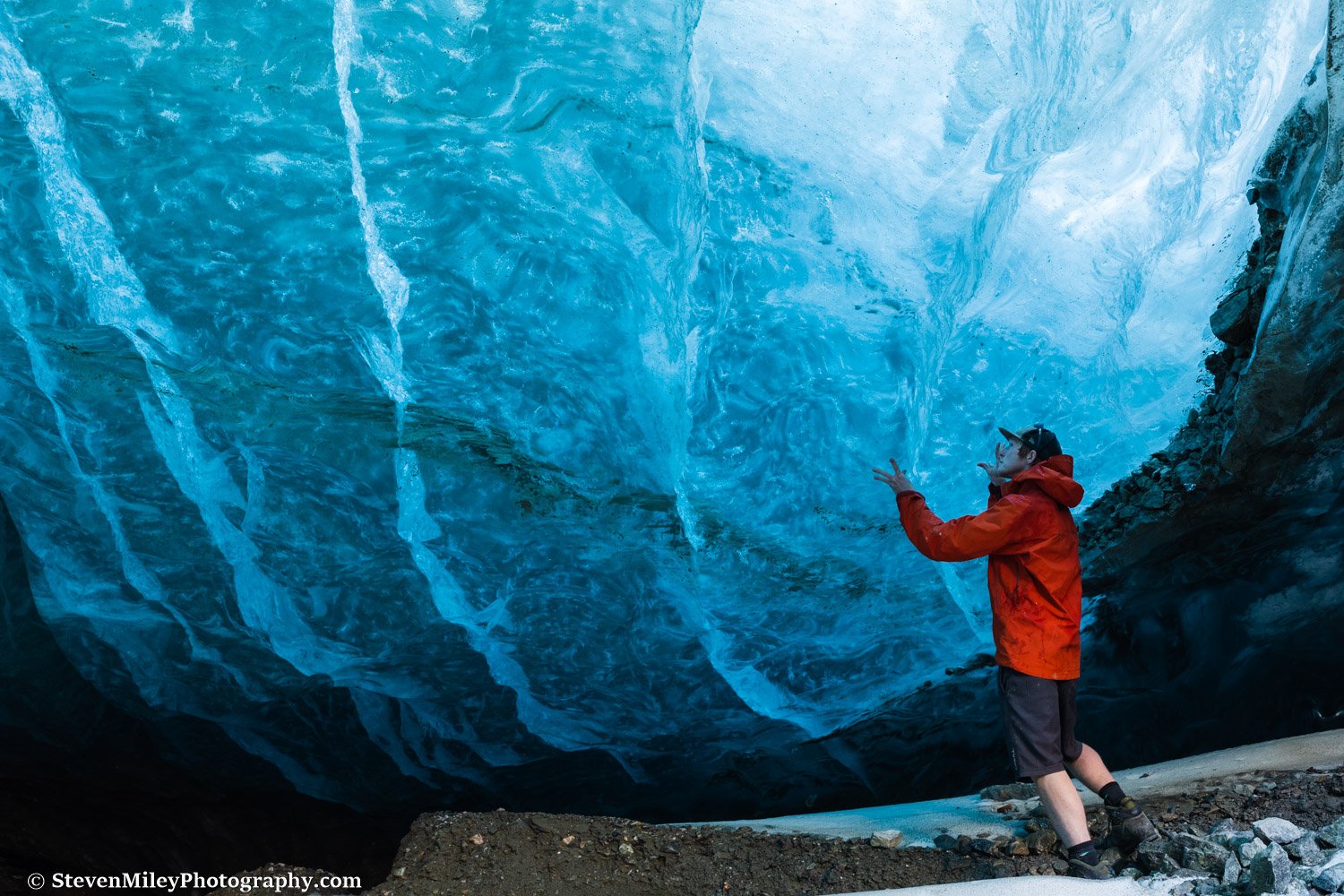
1. Canwell Glacier Ice Cave

Last summer I found a new ice cave in the middle of Canwell Glacier that glowed beautifully. I guided several customers there in July, August, and September so I got to watch it change slowly as it melted over the summer. (Check my hiking tours page for more info.) I like this particular shot because of the pattern of cracks in the ice and the vivid blue color.

2. Snow & Fall Colors


Winter arrived early in Delta Junction last year. In fact, it arrived before fall was over. Heavy snow fell in September and it never fully melted. This created a unique opportunity to photograph fall foliage with snow. I took this shot with my Sony FE 135mm f/1.8 GM lens, which excels at macro shots of larger objects and has quickly become one of my favorite landscape lenses, even if most would consider it a portrait lens.

3. Packrafting the McKinley River

You’d think a shot like this would have been done before, but as far as I can tell it hasn’t. The McKinley River provides sweeping views of Denali and the Alaska Range, but prospective paddlers will have trouble finding any information about the river and lugging a raft there is a complicated endeavor. I took this shot after crossing Muldrow Glacier and floating from near the toe of the glacier to the McKinley Bar Trail. You can read more about that adventure here.

4. Donnelly Dome Aurora

I carried a new Sony a7S III camera up Donnelly Dome with a gimbal to practice shooting aurora video near the end of aurora season in mid-April. My buddy Brian came with me and we were treated to an amazing show on the climb up. The aurora was a bit lackluster while we were on top of the mountain, but it lit up briefly just as we started back down. You can watch video from this night here.

5. Mount Moffit Sunset Selfie


While photographing sunset high on a ridge above Trident Glacier, I saw the small rock pedestal in this photo still being hit by the sun after the other surrounding rocks had fallen into the shadows. I raced to set up this selfie shot and somehow accidentally set my aperture to f/18, but the shot still looks sharp, diffraction notwithstanding. That’s Mount Moffit viewed from the northeast with a spectacular icefall running below. Read more about this photography expedition here.

6. 40 Below Aurora

I don’t know the exact temperature when I took this photo, but it was no warmer than -35°F. Absolutely bonechilling. I remember having to walk briskly up and down the snowy road I was parked along a few times to stay warm. I was guiding another photographer and our camera batteries kept dying every 20 minutes or so. But when the aurora suddenly began erupting I forgot about the cold and immediately dove into thigh-high powder snow to capture this display unimpeded by trees and without the road in the frame. I didn’t have time to extend the legs on my tripod or attempt to find solid footing for it, so my camera was less than a foot above the surface of the snow with most of the tripod buried in snow. I was shooting with a 35mm lens so the trees in the foreground are a bit out-of-focus but I don’t feel like that matters with such an amazing aurora. If I were shooting wider those curves in the aurora just wouldn’t look as stunning.

7. Black Rapids Glacier

For a couple years now I’ve been taking a handful of customers in good shape with plenty of hiking experience to Black Rapids Glacier. One of my customers in March was my former coworker Gary. We enjoyed absolutely perfect weather that day, and the surface of the frozen lake in front of the glacier was mostly exposed. I feel like I’m on another planet when I’m hiking around Black Rapids Glacier, and I feel like this shot captures some of that otherworldly feeling. See my winter tours page for tour info.

8. Mount Moffit Sunrise Selfie

Similar to shot #5 above, this aspect shows Mount Moffit at sunrise viewed from the north. A handful of climbers may recognize Moffit’s “Entropy Wall” in this shot. I love the staggering size of Moffit and could spend an entire summer taking different shots like this. In hindsight, I wish I had placed the tripod a bit higher up so I would have contrasted better against the shadowy area on the mountain, but I can’t recall if that was even possible with the cliff bands out of frame to the right.

9. Mount Hayes Sunset

After taking some nice reflection shots of the Alaska Range at Donnelly Lake before sunset, I was winding over the hills above the lake looking for a nice spot to camp away from the wretched mosquitoes. I saw Mount Hayes peeking through the trees and took this shot handheld on a whim. I ended up liking it more than the tripod shots I took beside the water. The trees in the foreground add some depth to the image and frame the mountain nicely.

10. G3 Aurora


On the night of November 3, 2021 a powerful solar storm hit Earth causing one of the best aurora displays I’ve ever seen, and definitely the best one I’ve seen in several years. I was busy shooting video during some of the craziest moments, but when the aurora was less intense and moving more slowly I focused on taking photos. The color in the aurora was really amazing that night. You can see the video I shot from that night on YouTube here.